Elder Abuse: The Role of Health Care
Article by Claire Checkland, Executive Director, CCSMH
For the past six years, I have had the privilege of serving on the Board of Directors of the Canadian Network for the Prevention of Elder Abuse (CNPEA). Over that time, one reality has become increasingly clear: elder abuse is both widespread and persistently overlooked, not only by the public, but by funders, governments, and sometimes even by the systems designed to support older adults.
Part of the reason, I suspect, is that elder abuse is deeply uncomfortable to confront. It often involves family members, trusted caregivers, or people that an older adult depends on which is one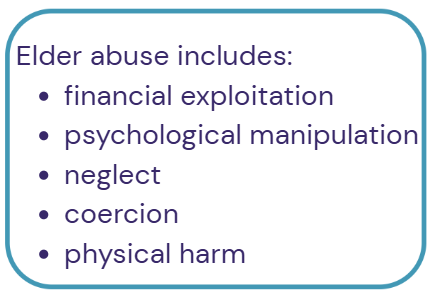 reason it can be so difficult to see and even harder to address. Relationships and situations can be complex, emotionally charged, and difficult to untangle. Adding to the complexity are mental health considerations—specifically, whether existing mental health issues increase an older adult’s vulnerability to abuse, or whether abuse itself contributes to the development of mental illness. Assessment can be particularly challenging in cases of elder abuse, where what appears to be mental illness may instead reflect emotional responses to harm, increasing the risk of misdiagnosis.
These complexities are especially evident in health care settings. Older adults may present with depression, cognitive impairment, or other conditions that heighten dependence on others or influence how concerns are expressed. At the same time, abuse can contribute to changes in mood, behaviour, sleep, and overall functioning. Symptoms such as anxiety, withdrawal, or confusion may, in some cases, be responses to ongoing harm rather than indicators of underlying pathology.
This overlap makes interpretation difficult. Expressions of fear or mistrust may be attributed to paranoia or cognitive decline when they are grounded in real experiences. Financial difficulties may be misread as impaired decision-making when exploitation is occurring. Without careful, contextual assessment, there is a risk of both overlooking abuse and misinterpreting an older adult’s situation. Faced with such complexity, there can be a quiet societal tendency not to look too closely—or to avoid asking difficult questions.

Close up view of doctor touching patient hand, showing empathy and kindness.
And yet there are moments when there are opportunities to notice and to ask. Health care providers are often among the few professionals who have regular contact with older adults. Family physicians, nurses, pharmacists, and home care providers may see someone repeatedly over months or years. That continuity places them in a unique position to notice changes, shifts in mood, behaviour, health, or circumstances that might suggest something is not right.
At the same time, clinicians are working in systems that are already stretched. Many providers express uncertainty about what their role should be if concerns about possible abuse arise. They want to support their patients but may not always feel confident about how to raise the issue safely, what questions to ask, or what steps they could follow.
Supporting older adults who may be experiencing abuse requires care. A well-intentioned intervention can sometimes increase risk if it is not handled thoughtfully, particularly when an older adult depends on the person who may be causing harm. Approaches that respect autonomy, prioritize safety, and offer options rather than directives can help ensure that attempts to help do not unintentionally make the situation worse.
Recognizing these realities is important. Health care providers are not there to untangle complex family, financial, or legal situations. But they can play a meaningful role by noticing concerns, creating space for older adults to speak openly, and helping connect people to appropriate supports when needed.
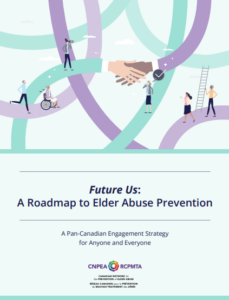
Recent work from the Canadian Network for the Prevention of Elder Abuse, including its Future Us: Roadmap to Elder Abuse Prevention report, emphasizes that addressing elder abuse requires a coordinated response across sectors, including health care, social services, financial institutions, and community organizations.
Within that broader response, there is an opportunity to better equip health care providers for the role they can realistically play. This may include clearer clinical guidance on recognizing potential warning signs, practical advice on how to ask about concerns, and pathways to community supports.
Elder abuse is not something we can address if we are not willing to face it. Governments, policy makers, funders, health systems, and community organizations all have a role to play. Keeping these experiences in the shadows does not make them disappear. It only reinforces the stigma and silence that allow abuse to continue. Bringing this issue further into the open helps ensure that when something is wrong in the lives of older adults, someone is prepared to notice and respond.
Suggested Resources for Future Learning
Preventing and Addressing Abuse and Neglect of Older Adults: Person-Centred, Collaborative, System-Wide Approaches (Registered Nurses Association of Ontario, 2014)
Future Us: A Roadmap to Elder Abuse Prevention (Canadian Network for the Prevention of Elder Abuse – CNPEA)
Practical Guide to Elder Abuse and Neglect Law in Canada (Canadian Centre for Elder Law)
Find Help. CNPEA list of where to get help in provinces and territories across Canada