
Through Their Lens: The Impact of Climate Change on Older Adults’ Mental Health
In Canada, we’re experiencing more frequent extreme climate-related weather events like heatwaves, floods, droughts, wildfires, hurricanes, tornadoes, and ice storms. These changes are happening at a more rapid pace than anticipated and the impact on humans is taking its toll, physically and mentally.
The CCSMH was interested in knowing how the mental health of older adults was being impacted and reached out to a few researchers to see about a potential partnership. We were very fortunate to connect with Dr. Jennifer Baumbusch at the University of British Columbia. With other community partners, we embarked on a CIHR-funded research study that involved having older adults in B.C. take photos depicting how their mental health was affected by climate change.
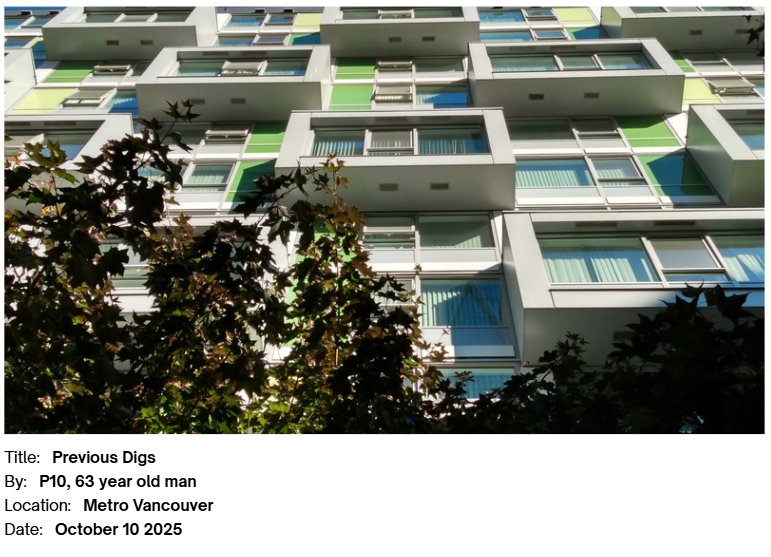 The Photovoice Study
A total of 15 older adults in four regions of B.C. submitted several photos. The had two interviews with researchers and several participated in a focus group where photos were shared, discussed and themes identified. The findings and corresponding papers are yet to come. In the meantime, the photos and themes can be found in a beautiful Virtual Gallery.
Photovoice Virtual Gallery
The photos, along with brief descriptions written by the participants, are displayed in the Photovoice Virtual Gallery in the main section. In addition, members of Dr. Baumbusch’s team have painstakingly curated the images, with guidance from the participants, into six themes:
- Aging, time, and the intergenerational perspective

- Indirect impacts, the mental load of climate change
- Direct impacts
- Class, income and the mental health impacts of climate change
- The politics of mental health and climate change
- What helps – messages of hope
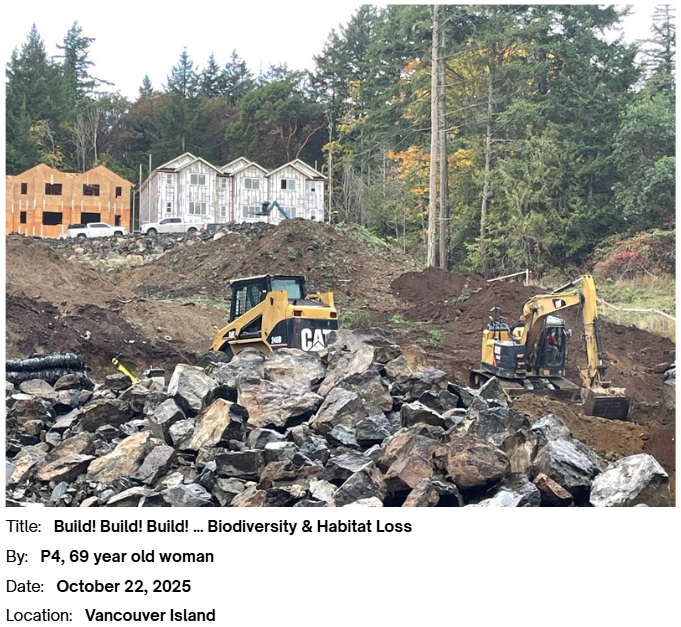
The Gallery was launched on National Seniors’ Day, October 1st with a webinar that featured two participants and a panel. The Photovoice participants were generous to share their photos, thoughts and feelings. Given the activity in the chat, the conversation resonated for many webinar participants. The webinar was recorded and can be found here.
Submit Your Own Photo!
Are you feeling inspired to participate? You can submit your own photo to this project. All the details are available at the link.
The Photovoice Travelling Exhibit
Thanks to a second grant from CIHR, we’re taking a photo collection on the road. On the same day as the Virtual Gallery launch, project partner, Helen Boyd from CANE (Canadian Association of Nurses for the Environment) hosted the launch of a travelling exhibit of 32 photos at the Greater Victoria Library Central Branch which included a panel discussion. Two research participants were present to share their photos and to have a discussion with panel members and the audience. The big theme that arose during the conversation was the important of social connection.
The Exhibit will travel to Vancouver (November 12 – December 3). The In-Person Panel Discussion will take place on Thursday, November 26 from 10:30 am to 12 noon PT at the Mount Pleasant Branch, Vancouver Public Library.
In the spring, the Exhibit will travel to Prince Edward County and Peterborough in Ontario. More details will be shared closer to the events.
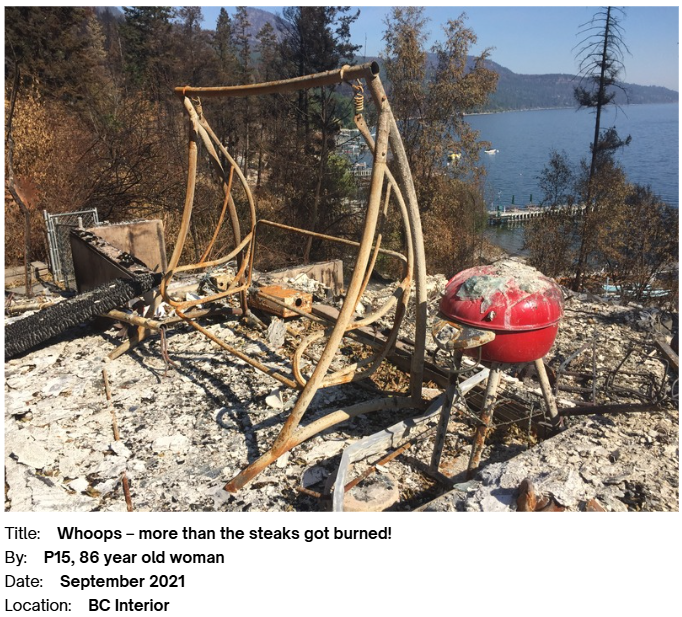 Benefits of This Research
The statement that made the most impact was when a participant shared that participating in this project was the first time that anyone had asked her how she was affected by two wildfires. The discussions during the focus group with research participants prompted people to think about issues they hadn’t considered, validated feelings and engendered a sense of community. We often place our focus on physical safety in emergencies and disasters but clearly, there needs to be more attention placed on how people are being affected emotionally and mentally. When Dr. Baumbusch first embarked on this project, she discovered that there is very little research evidence in the area of climate change and the mental health of older adults. What better way to start but to ask older adults themselves how they feel and how they cope?
What’s Next?
A scoping review published this past summer reported that:
“Depression, anxiety, and posttraumatic stress disorder (PTSD) were the most commonly reported conditions, particularly following wildfires and floods. Climate-related exposures such as property loss, displacement, and disruption of livelihoods were identified as key factors leading to psychological distress.”
This same publication concluded that further research is required to understand how climate change is impacting the mental health of diverse populations. The participatory research that we have undertaken with Dr. Baumbusch’s team will add important information to this field of study. If our next funding proposal is successful, our intention is to expand this work across Canada. Stay tuned!