
Mental Health and Fraud

Financial Fraud (Scams) and Mental Health
Fraud and scams can have profound and lasting impacts on the mental and emotional well-being of older adults. Beyond the financial loss, many individuals experience feelings of shame, embarrassment, anger, anxiety, and a deep loss of trust—both in others and in their own judgment. These experiences can be isolating, and too often, they remain hidden. Misconceptions about who is affected by fraud can reinforce stigma and self-blame, making it harder for people to seek support or speak openly about what has happened.
Our resources are designed to support older adults in understanding and navigating the emotional impact of fraud, while also offering pathways toward healing and recovery. They aim to reduce stigma, validate individual experiences, and create space for compassionate conversations.
For Older Adults and Care Partners
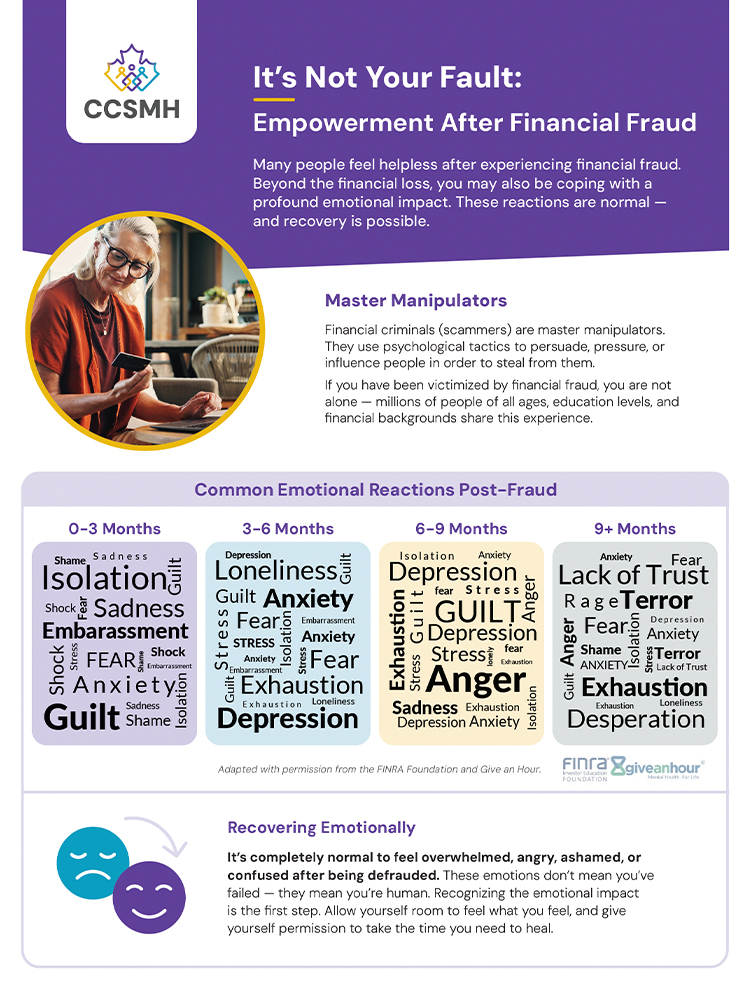
It’s Not Your Fault: Empowerment After Financial Fraud
Learn about the emotional impact of fraud, how to take control back, the importance of staying connected and where to get help.
For Health Care Professionals and Allies
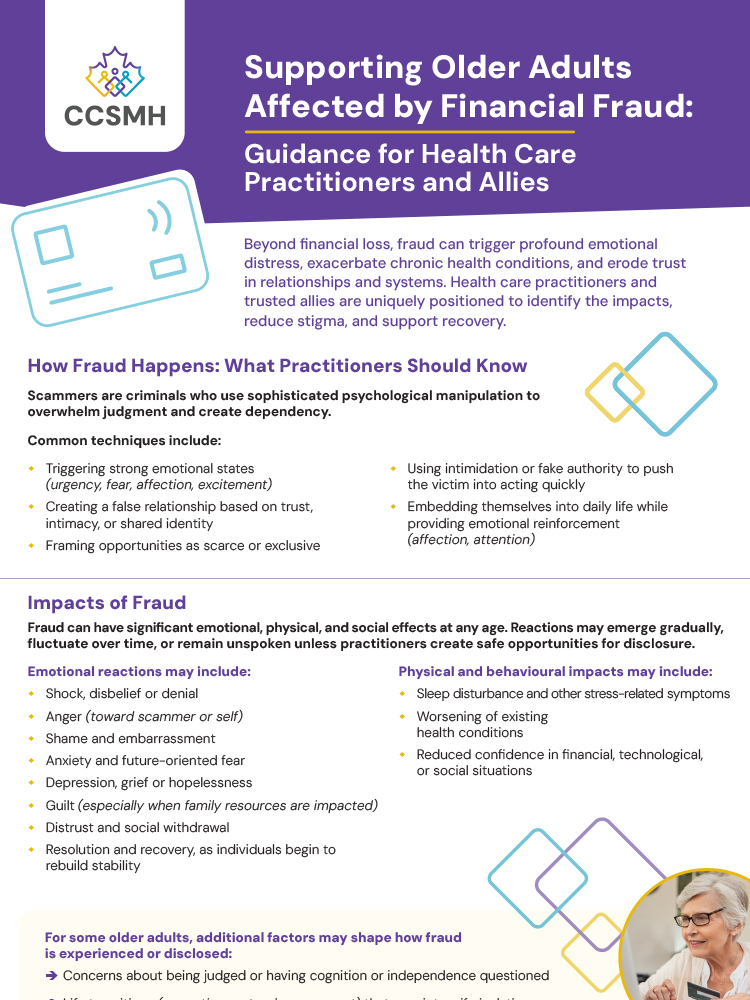
Supporting Older Adults Affected by Financial Fraud: Guidance for Health Care Practitioners and Allies
Beyond financial loss, fraud can trigger profound emotional distress, exacerbate chronic health conditions, and erode trust in relationships and systems. Health care practitioners and trusted allies are uniquely positioned to identify the impacts, reduce stigma, and support recovery.
[VIDEO] Forum on Financial Fraud: A conversation about the mental health impacts on older adults
For older adults, victim-blaming is paired with ageist attitudes which leads to too many individuals not reporting these crimes and not seeking support for the resulting distress. This online virtual forum (May 2025) was intended to start a conversation about the impact of financial fraud on the mental health of older adults. This May 2025 event was hosted by CCSMH and brainXchange.