

Insights from the Field
How clinicians play a vital role
Every day, health care and social service professionals support the social health of older adults in their care. Their perspectives help shape the way forward. You'll find some of their insights here as well as helpful tools and resources.
"Take your time. An isolated person needs to talk and, above all, build trust.”
– Marianne, Psychosocial Worker, Québec
"Focus on relationship-centred interaction, not just programming.”
– Jini, Occupational Therapist, Ontario
"Don't jump to the conclusion that a pharmacologic approach is the first option.”
– Russ, Physician, Manitoba
Why It Matters
Social isolation and loneliness is not always obvious
Lessons from leaders
Small moves create ripples of impact
Angela is a community organization worker in British Columbia who brings social connection into every part of her work — not through big programs, but through intentional, everyday interactions. Her advice reflects a practical, relationship-first approach.

1. Listen and start small
Sometimes the biggest transformations begin with a simple conversation that can spark real confidence and greater independence.
2. Build connection with your community
Team up with local organizations to discover resources you didn't know existed.

3. Empower, don't just assist
Sometimes supporting someone so they can do it themselves is more powerful than doing it for them.
Putting it into practice
A story of reconnection
How one long-term care facility in Saskatchewan co-ordinated care between the physician, pharmacy and care team to empower one older adult to move from isolation into re-engaging in daily life.
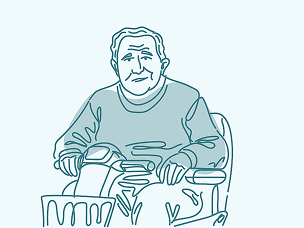
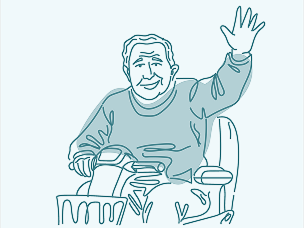
A gentleman arrived feeling lonely and disconnected after a difficult experience in another residence. The team started by listening and shaping his care around what mattered to him: independence, using his scooter, familiar food, his faith and small comforts.
Helpful Tools and Resources
Spotting the signs of social isolation and loneliness in your practice
Do you know the difference?
Social isolation and loneliness are not the same
Not everyone uses these terms in the same way, but the distinction matters. Social isolation refers to an objective lack of social contact or connection. Loneliness is the subjective experience of feeling that existing relationships aren’t meeting one’s emotional needs.
About the Clinical Guidelines
A global first for social isolation and loneliness
Did you know that the topic of social isolation and loneliness is recommended as a key part of clinical assessments and conversations?
In 2024, Canada released the world’s first clinical guidelines – 17 evidence-based recommendations for a diversity of health care and social service professionals.
The CCSMH's approach
Supporting seniors' mental health
Promoting the mental health of seniors by connecting people, ideas and resources. CCSMH is a program of the Canadian Academy of Geriatric Psychiatry (CAGP).
Connect with us