Social Isolation and Loneliness – Tools & Resources
Clinical Guidelines
Discover the first guidelines on social isolation and loneliness in older adults.
For Health Care Professionals
Find clinical tools and resources to support your patients or clients.
For Older Adults & Care Partners
Find resources and tools to support mental health and well-being for yourself and loved ones.
Learn about the ripple effect.
Click to explore our spotlight on practice change for social isolation & loneliness in older adults
Tools
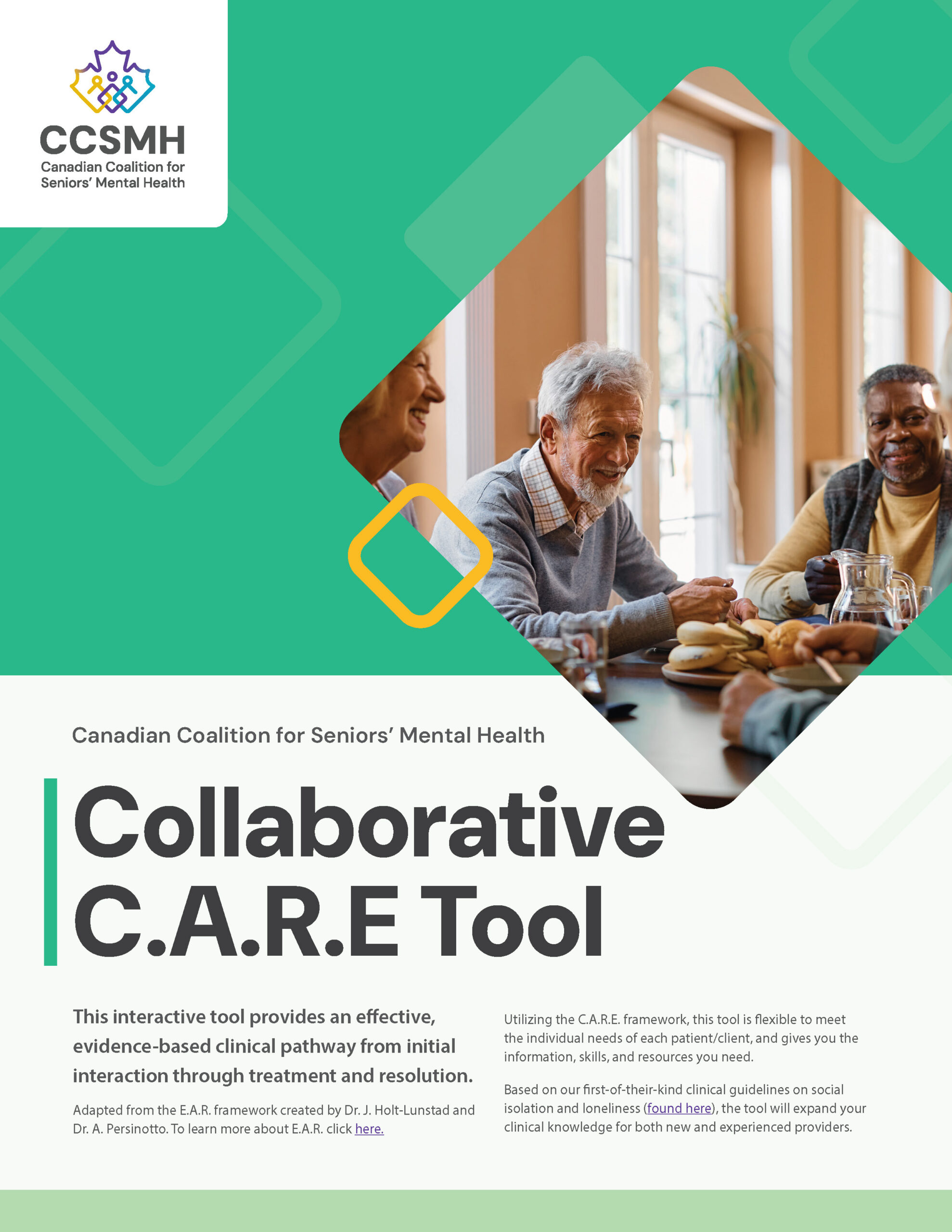
Collaborative C.A.R.E. Tool
This interactive tool provides an effective, evidence-based clinical pathway for social isolation and loneliness from initial interaction through treatment and resolution.
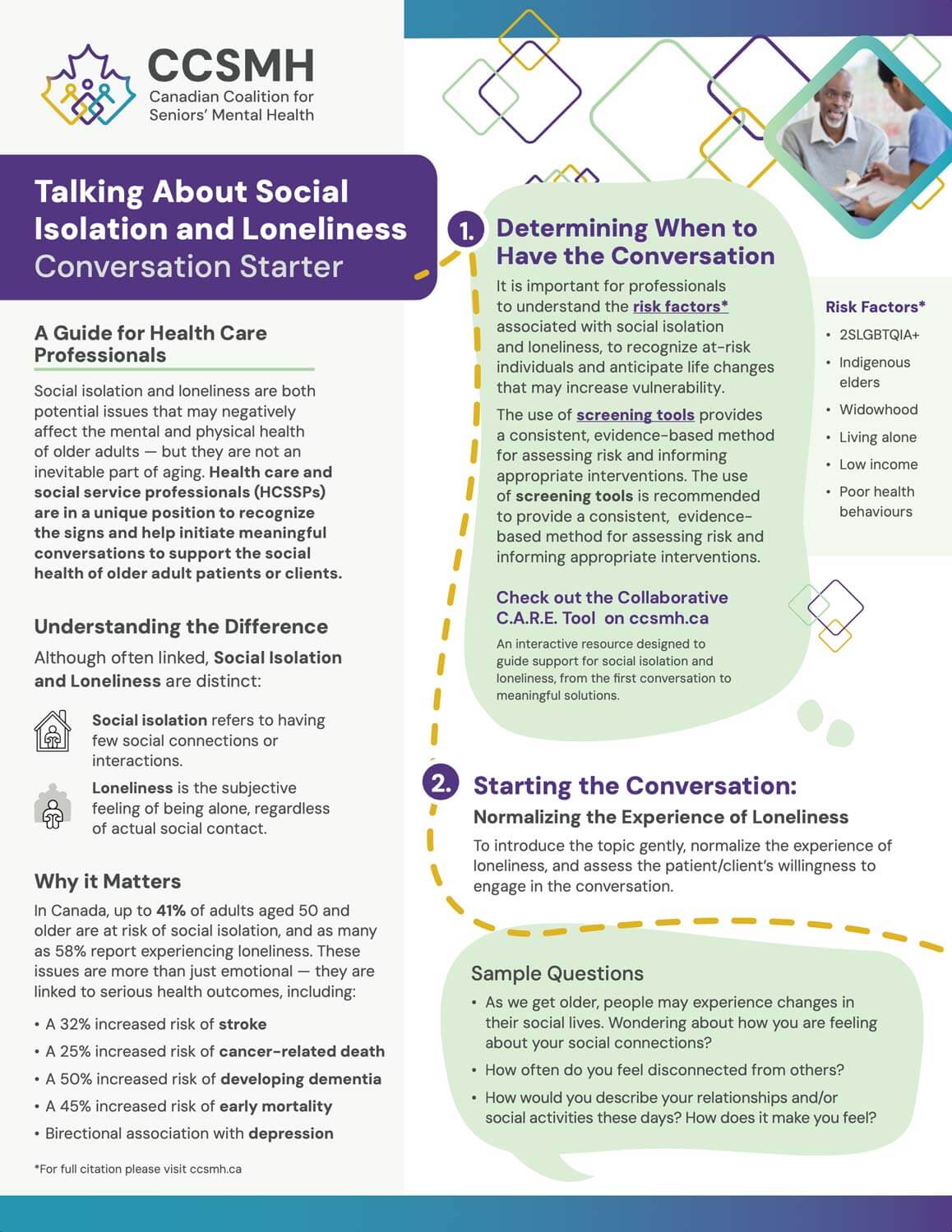
HCSSP Conversation Starter
A practical guide designed to help initiate meaningful, empathetic conversations with older adults. Includes prompts and guidance to support discussions about social health, connection, and belonging.
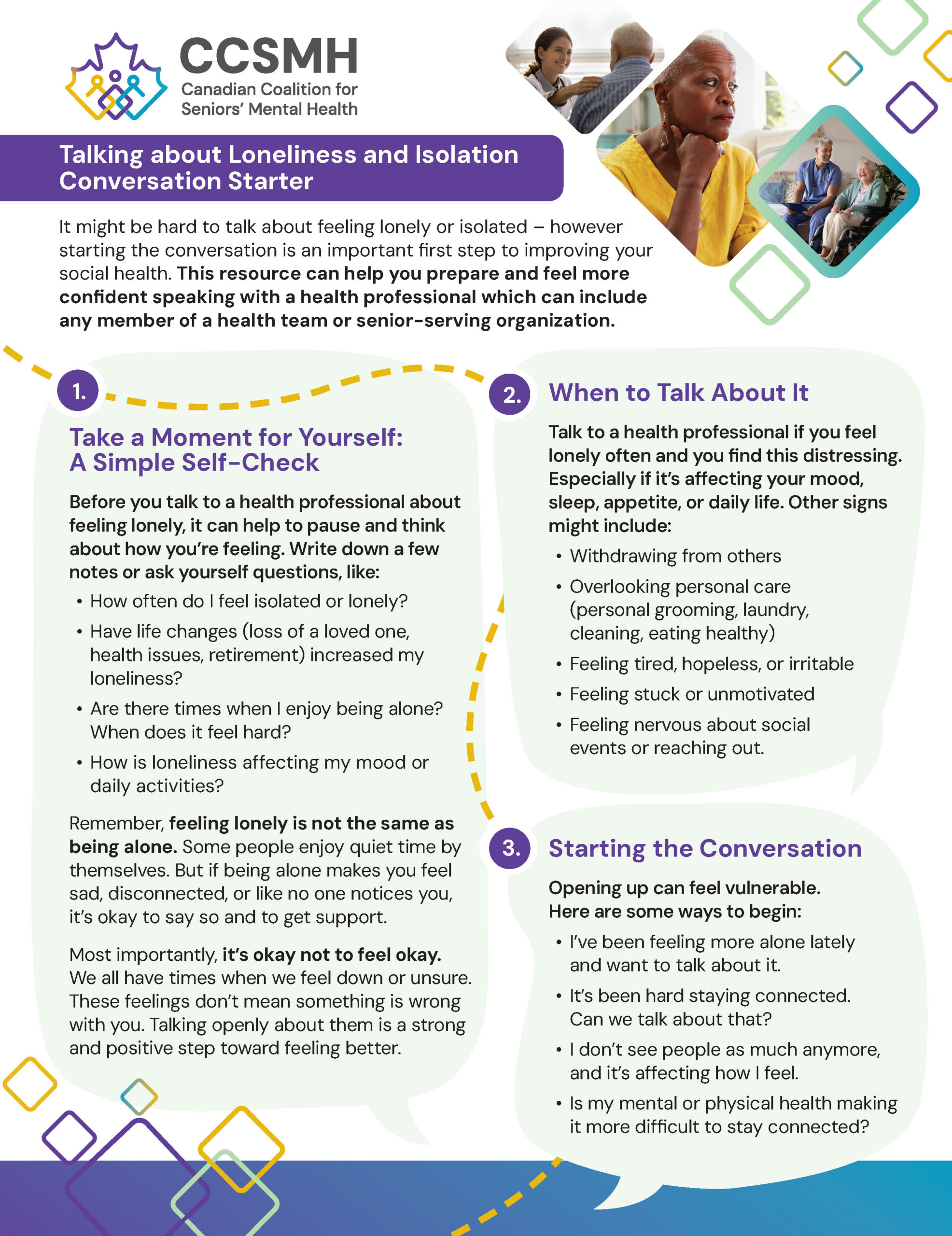
Older Adult Conversation Starter
The Conversation Starter for Older Adults is a supportive resource designed to help older adults begin talking about feelings of loneliness and social isolation. It offers simple prompts, self-reflection tips, and guidance to build confidence in seeking support from health care and social service professionals.
Clinician's Pocket Card
The Social Isolation and Loneliness In Older Adults clinician pocket card provides an overview of our recommendations for assessment and treatment.

Social Isolation & Loneliness Brochure
It’s important to be aware of how we may be at risk of becoming socially isolated or lonely. It’s also important to know how the people we know—spouses, partners, friends, family, neighbours, community members, and professional care partners—may face these challenges.
Download our brochure to learn more about social isolation and loneliness in older adults and share it with your colleagues, friends and family.
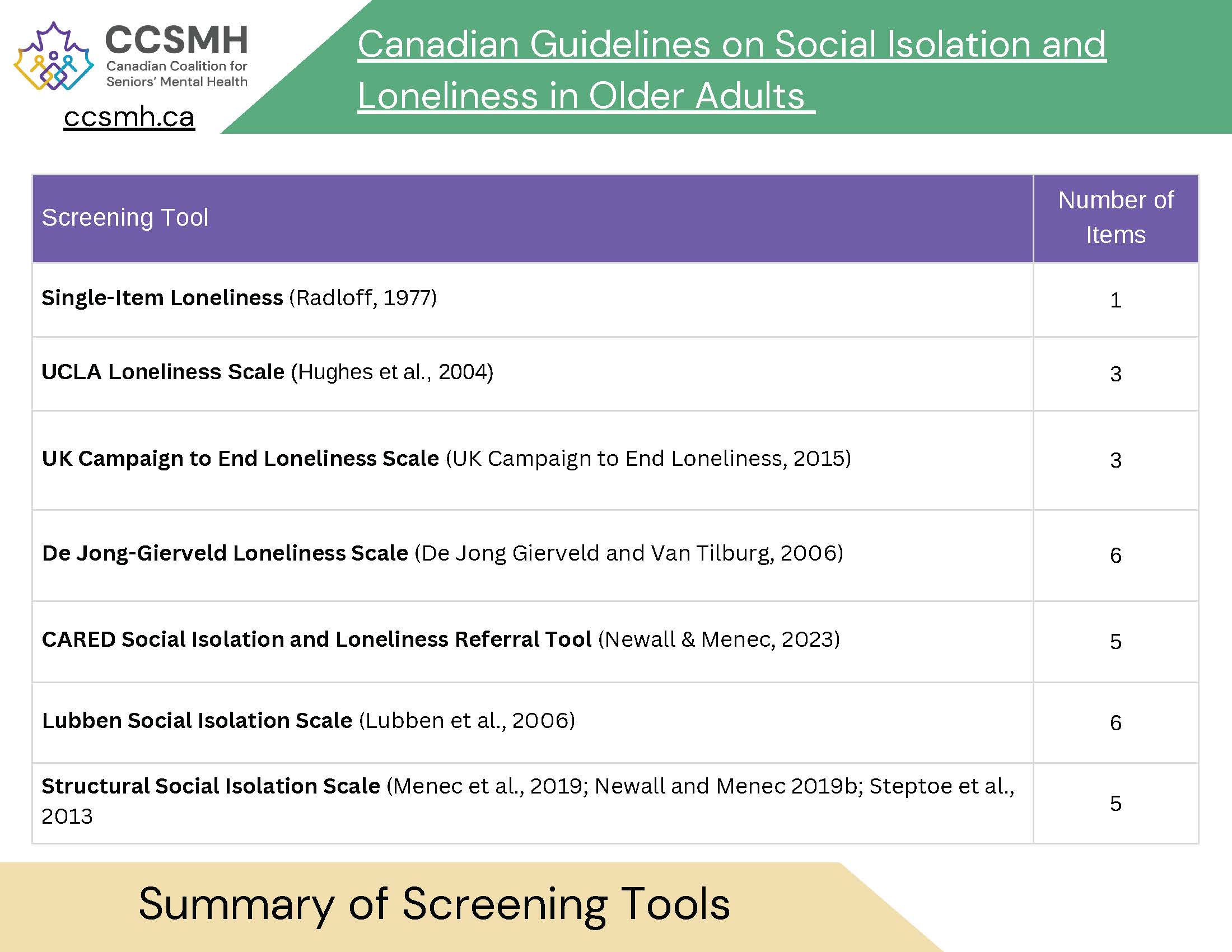
Screening Tools Summary
The use of screening tools provides a consistent, evidence-based method for assessing risk and informing appropriate interventions. The use of screening tools is recommended to provide a consistent, evidence-based method for assessing risk and informing appropriate interventions.
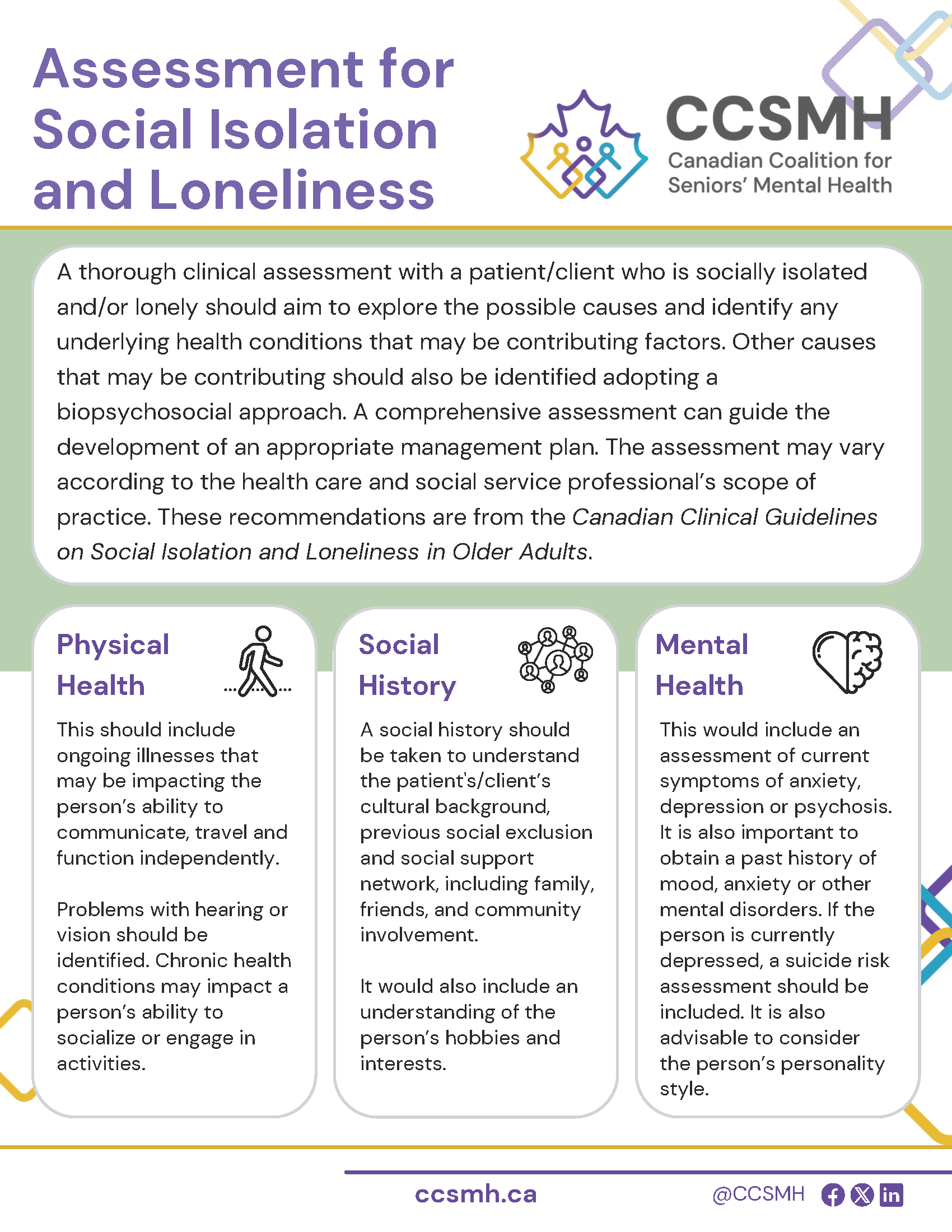
Assessment Info Sheet
A comprehensive assessment can guide the development of an appropriate management plan. Drawn from the guidelines, this resource is a helpful at-a-glance information sheet about the process of evaluating, assessing and treating social isolation and loneliness.
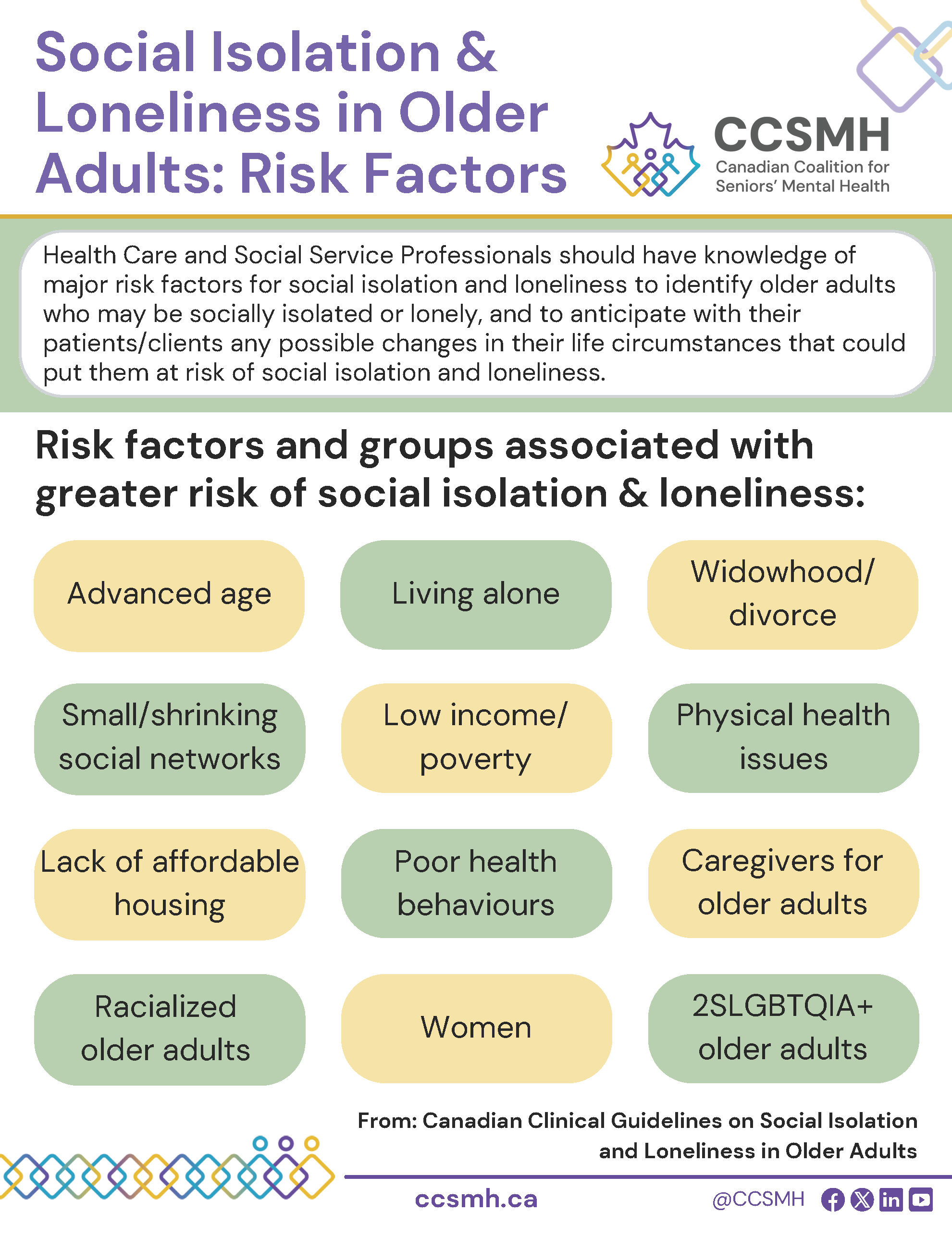
Risk Factors Info Sheet
Health care and social service professionals should have knowledge of major risk factors for social isolation and loneliness to identify older adults who may be socially isolated or lonely. Drawn from the guidelines, this infographic is a helpful at-a-glance information sheet about the risk factors and groups associated with a greater risk of social isolation and loneliness.
'Are you a Care Partner?' Info Sheet
Caregiving can be rewarding. Yet, most caregivers experience conflicting feelings of isolation, grief, compassion, joy and overwhelm as they provide care. Learn how to take care of your mental health.
Resources
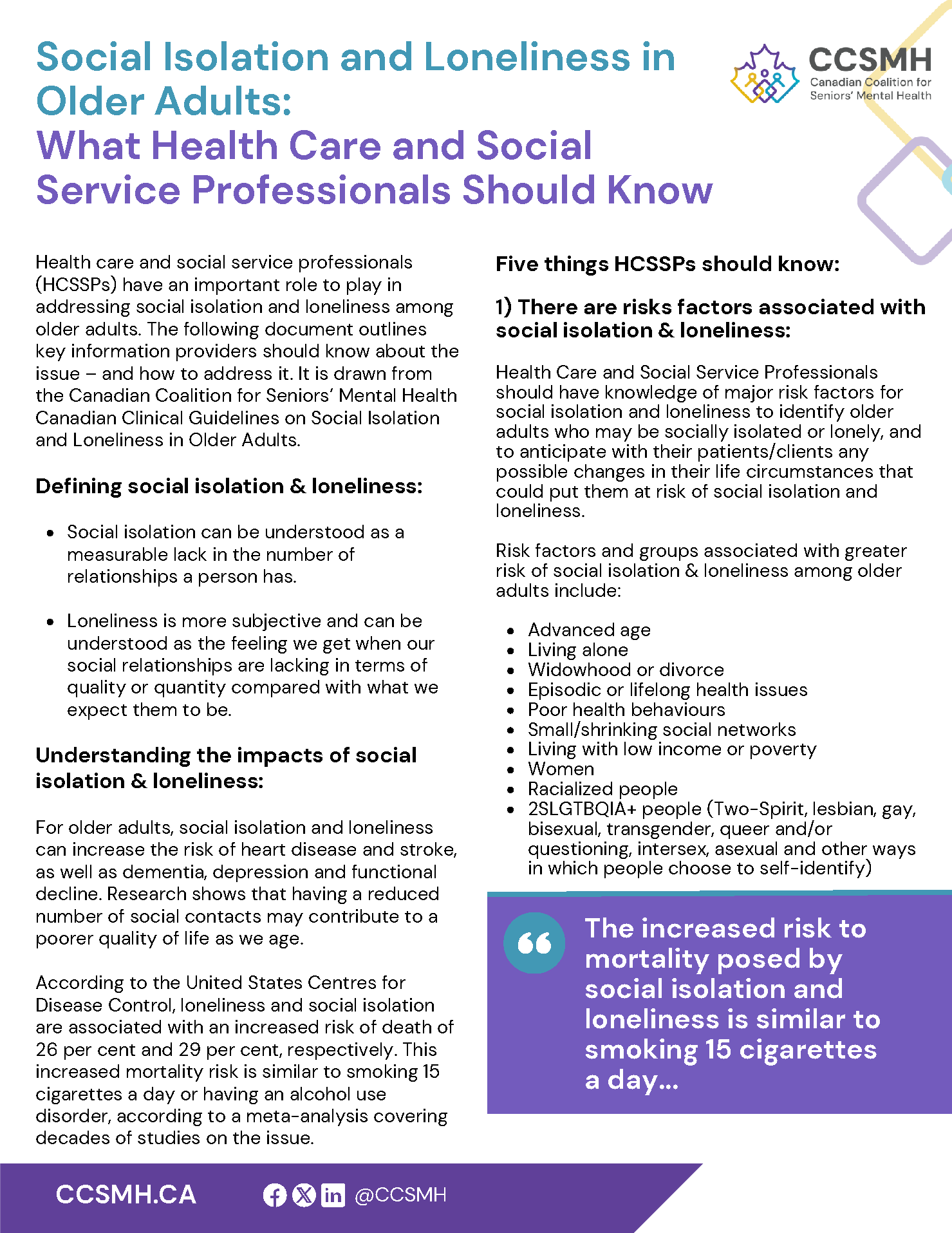
Key Takeaways from the Guidelines
Want to know more about key information presented in the recent Canadian Clinical Guidelines on Social Isolation and Loneliness in Older Adults? Print this resource to have the information on hand during your next visit with a health care or social service provider. You can also learn about important recommendations for health care professionals here.

The Results of Our National Survey
We are still learning the story of social isolation and loneliness for older adults in Canada. That's why we completed our national survey of older adults and HCSSPs. Check out our qualitative report to learn all the details and start the conversation today!

Social Isolation and Loneliness Resource List
Discover additional resources that can help you or a loved one understand social isolation and loneliness.
Read our article on social isolation and loneliness
Read the Op-Ed written by Dr. David Conn, CCSMH Co-chair and Claire Checkland, CCSMH Executive Director.
Read our Global Heroes article
Read the article which outlines the extent and risks related to social isolation among older adults.
Learn more about social isolation and loneliness in older adults with our video series
Watch our webinars
Prevention and Risk Factors of SILOA
Screening Tools and Assessment of SILOA
Interventions and Social Prescribing for SILOA

Our Research
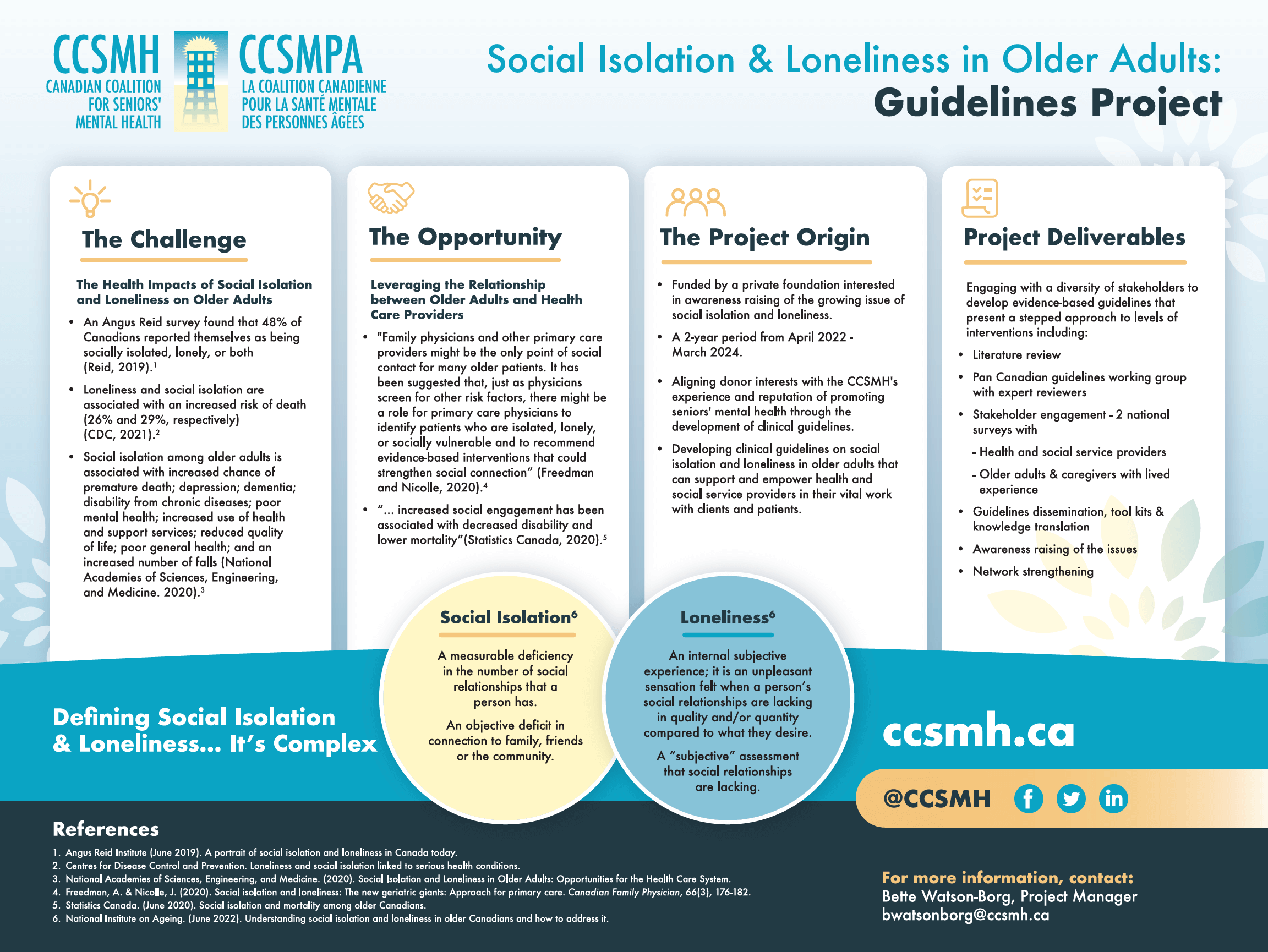
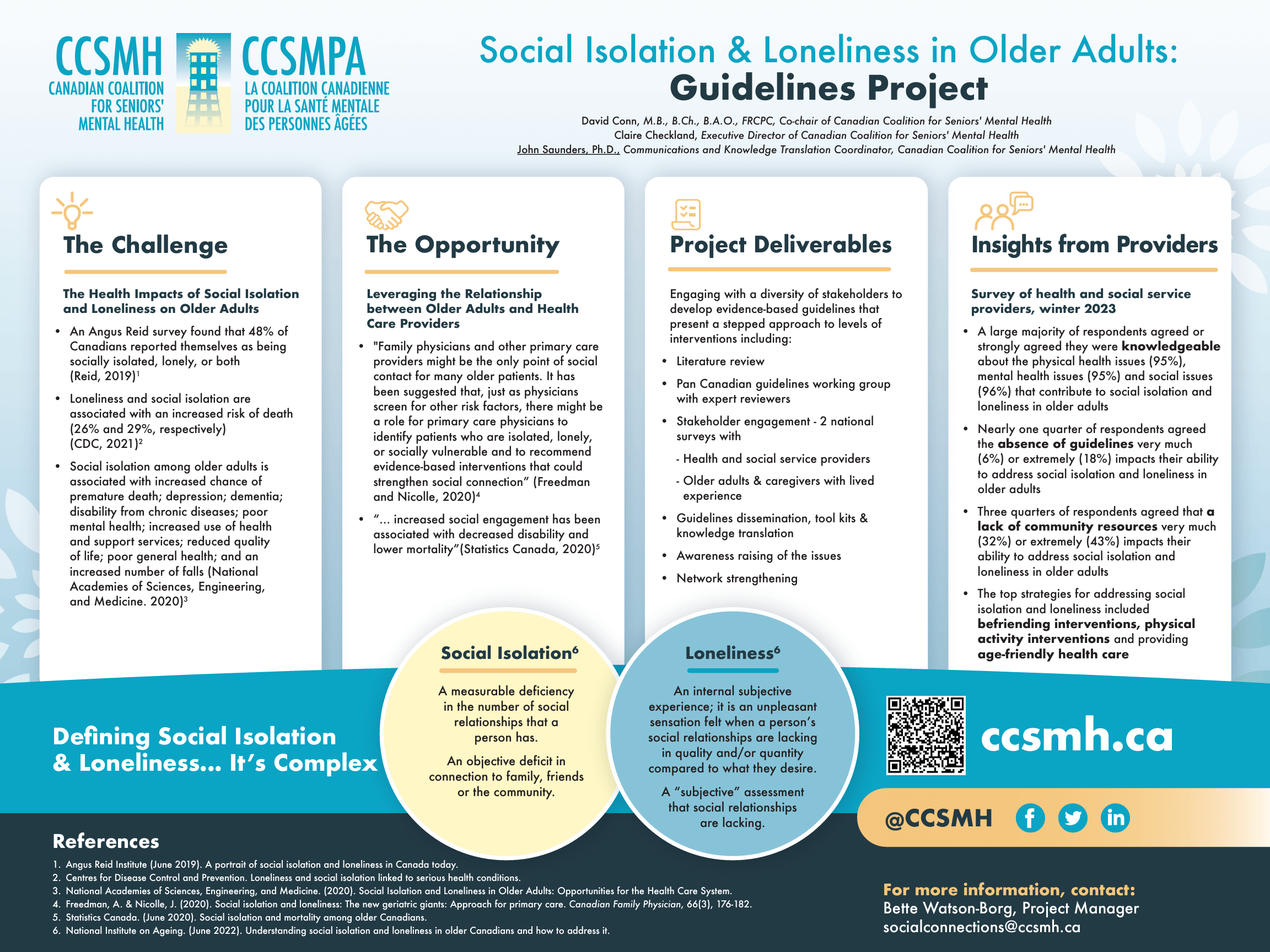
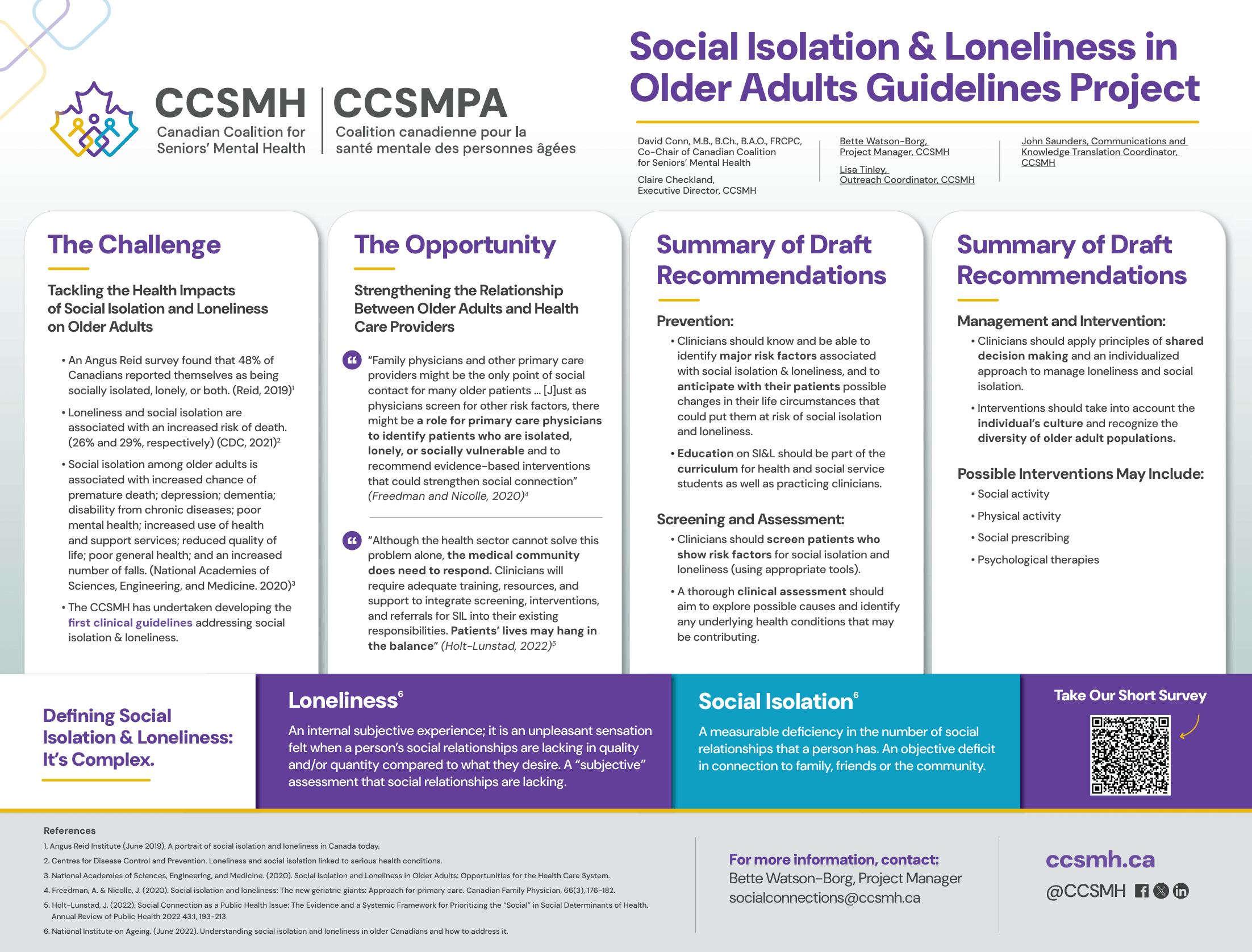
Over the course of the Social Isolation and Loneliness Project (2022-2024), we have conducted a range of research activities. These include national surveys, a scoping review on the issue and conference presentations.
National Surveys
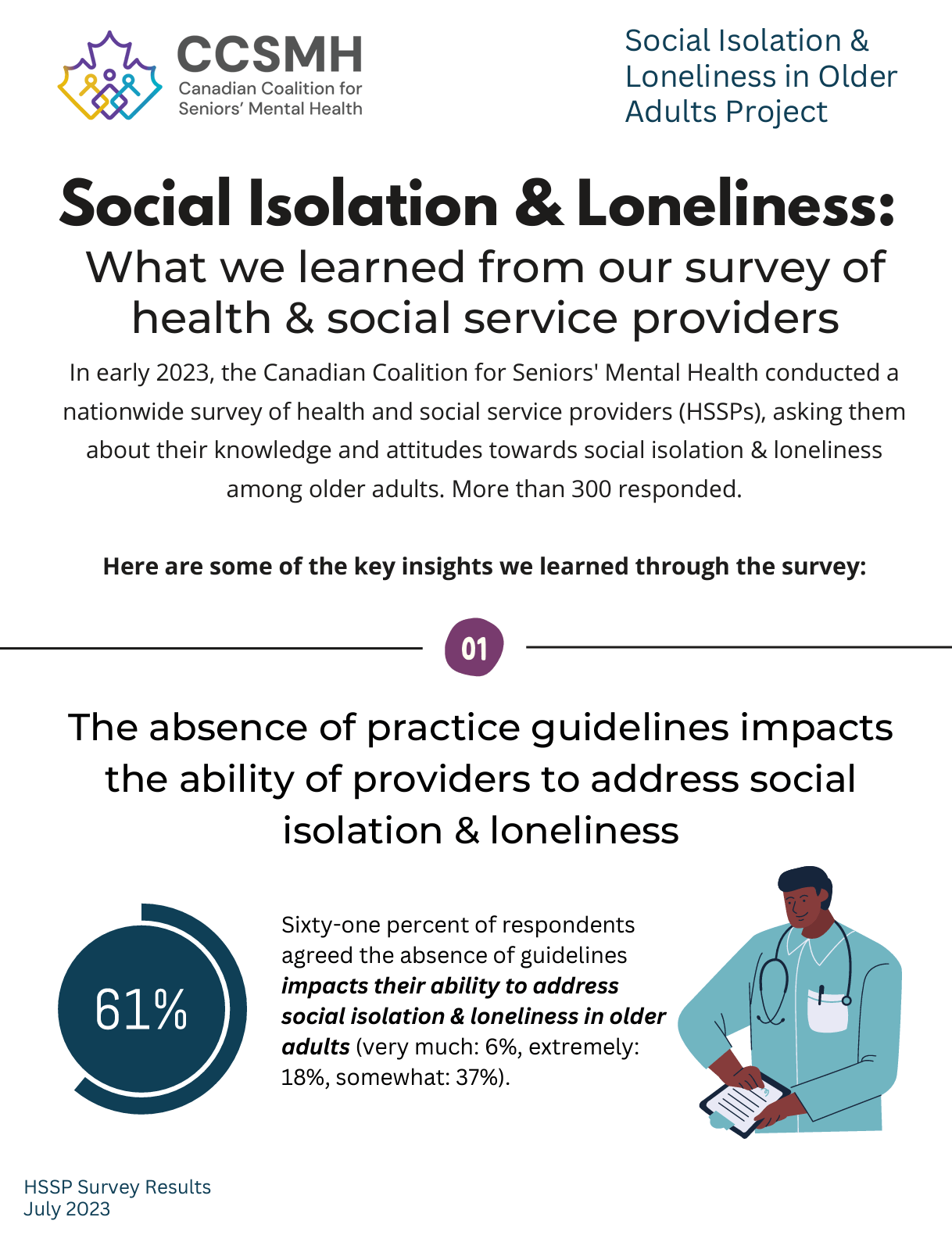
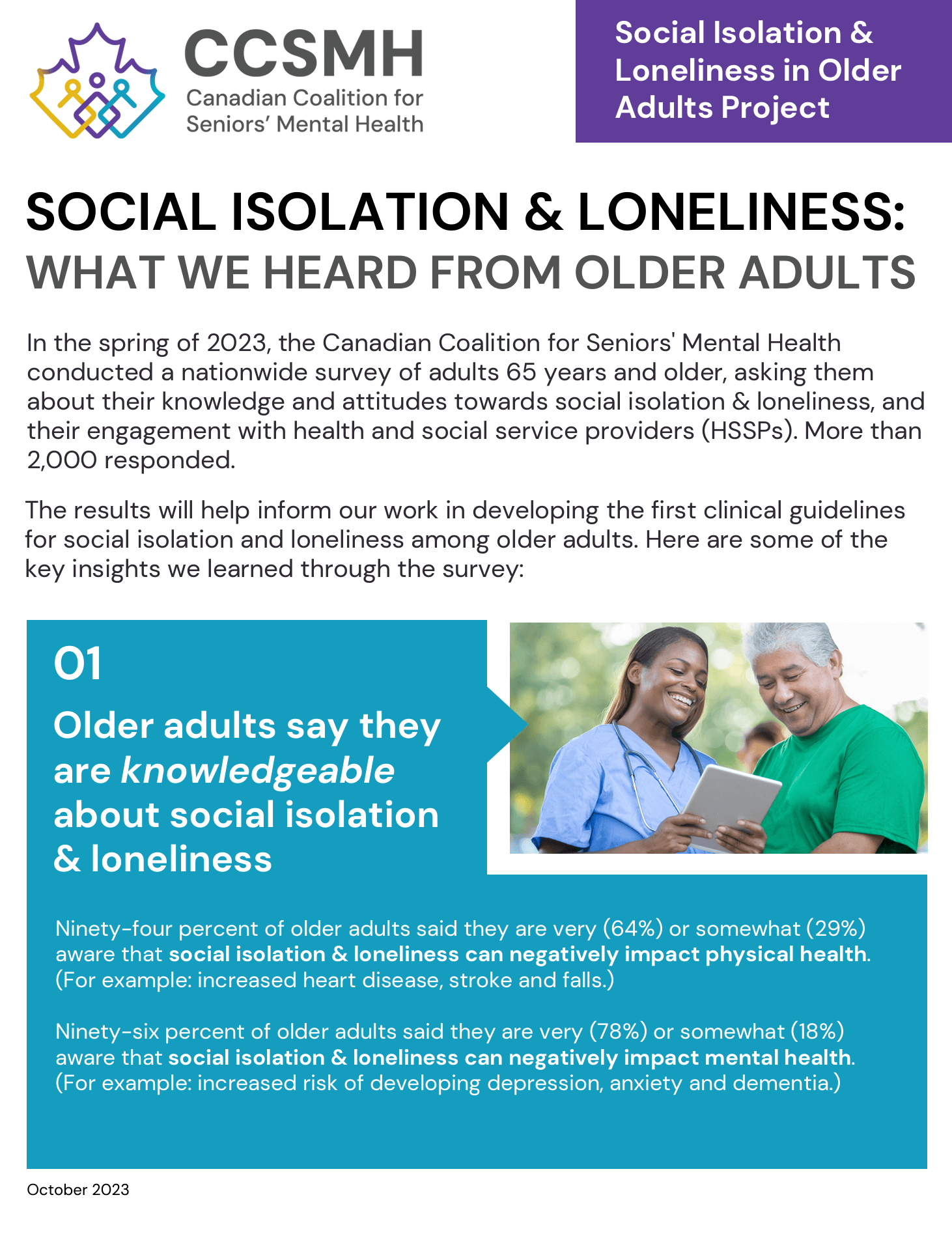
In 2023, we conducted two nationwide surveys to learn from older adults, health professionals and social service providers. We asked them about their knowledge and attitude towards social isolation and loneliness to help build our guidelines. The results helped inform our work in developing the first clinical guidelines for social isolation and loneliness among older adults.
Key Findings: Survey of Health and Social Service Providers
Key Findings: Survey of Older Adults
Conference Posters